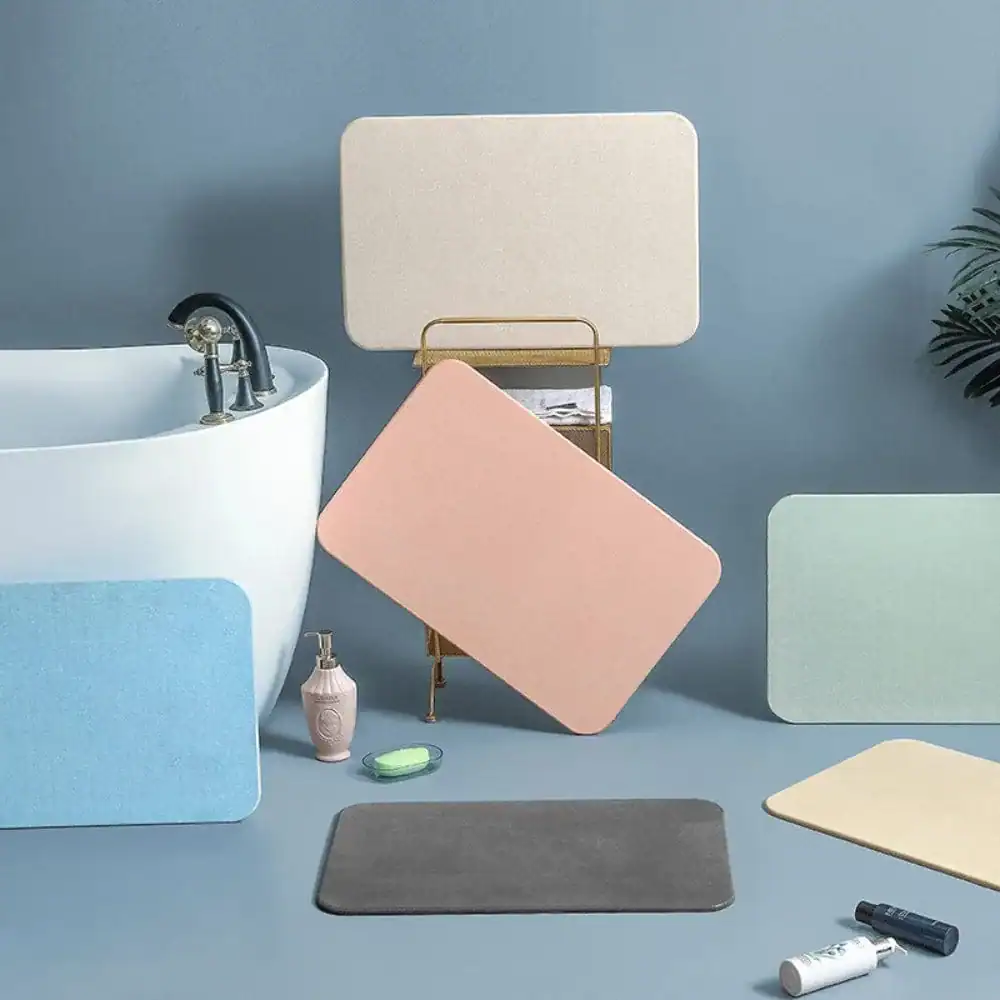
A stone bath mat looks like a simple slab, but it is a different object from a fabric mat. It is made of diatomite, also called diatomaceous earth, a porous mineral pressed into a rigid board. Water does not stay in fibers: it is drawn into the pores and then released into the air. That is why the care routine is so different. You never put a stone mat in the washing machine, and a few minutes of the right maintenance keep it working for a long time.
What makes a stone bath mat different
The surface of a diatomite mat is full of tiny pores. They are what make the top feel dry soon after you step off. The same pores are also what you need to protect. Soap residue, body oils and hard water minerals slowly settle in them, and the mat takes up water less well. Cleaning a stone mat is mostly about keeping those pores open.
Two more things to keep in mind: the board is rigid, so it can crack if it is dropped or bent, and it does not like being soaked for long periods.
Everyday care
- Let it dry between showers. If the bathroom stays very humid, stand the mat on its edge against the wall once in a while so the underside gets air too.
- Lift it to clean the floor. Water and dust collect under any mat. Wipe the floor and the rubber feet or pads under the mat from time to time.
- Keep products off it. Body lotion, oils and spilled shower gel are what clog the pores fastest.
How to clean a stone bath mat, step by step
Every week or two, or whenever the surface looks dull or marked:
- Dust it off. Brush or vacuum the surface to remove hair and dust.
- Rinse briefly. Hold it under running water for a few seconds or wipe it with a damp cloth. Do not leave it soaking in a tub.
- Brush gently. A soft brush and plain water are enough for most marks. For greasy spots, a very small amount of mild soap is fine, then rinse well.
- Dry it completely. Stand the mat on its edge or lay it on a rack in a ventilated spot until it is fully dry, ideally overnight, before you put it back.
How to restore a stone mat that no longer dries well
If water now sits on the surface instead of disappearing, the pores are clogged. The common fix is a light sanding, and many stone mats are sold with a small sheet of sandpaper for that purpose. Always check the instructions that came with your mat first, as some finishes should not be sanded.
- Work outside or over a trash bag, and avoid breathing in the fine dust.
- Use fine-grit sandpaper. Sand the stained or dull area lightly, with even, gentle strokes.
- Do not press hard or sand one spot for long. You only want to remove the top film, not dig into the board.
- Brush or wipe off the dust, rinse briefly and let it dry fully.
Test the result by sprinkling a little water on the sanded area. If it is taken up again, the job is done.
Troubleshooting: what are you seeing on your mat?
Stone mat vs fabric mat: care at a glance
| Stone (diatomite) mat | Fabric mat | |
|---|---|---|
| Washing machine | Never | Usually yes, check the label |
| Routine cleaning | Brush, brief rinse, dry on edge | Machine wash about once a week |
| Restoring | Light sanding with fine sandpaper | Shake out, brush the pile |
| Main risk | Cracking if dropped, clogged pores | Worn backing, staying damp |
For fabric mats, see our guide on how to wash bath mats.
When to replace a stone bath mat
A stone mat that has cracked through should be replaced, since the pieces can shift or break further underfoot. The same goes for a mat that stays wet even after a careful sanding. If you are shopping for a new one, our stone bath mat collection shows the sizes and finishes available, and the bath mat vs bath rug guide can help if you are hesitating between stone and fabric.
Frequently asked questions
Can you get a stone bath mat wet when cleaning it?
Yes, a short rinse is fine. What you should avoid is soaking it for a long time or putting it in a machine. Always let it dry completely afterwards.
How often should you sand a diatomite bath mat?
Only when it stops taking up water well. For many homes that means every few months at most. Sanding more often than needed wears the surface down.
Can I use vinegar on a stone bath mat?
Strong acids and harsh cleaners are best avoided on mineral boards. Plain water, a soft brush and, if needed, a drop of mild soap are the safest choice. Follow the manufacturer’s instructions if they say otherwise.
Is the dust from sanding a problem?
It is a very fine mineral dust, so it is sensible to sand outside or over a bag and not breathe it in. Wipe up the dust afterwards.

Practical guides on choosing, styling and caring for bath mats.